WhatTheStack the third
On making it through year three of WhatTheStack, what we learned, and sticking to our principles
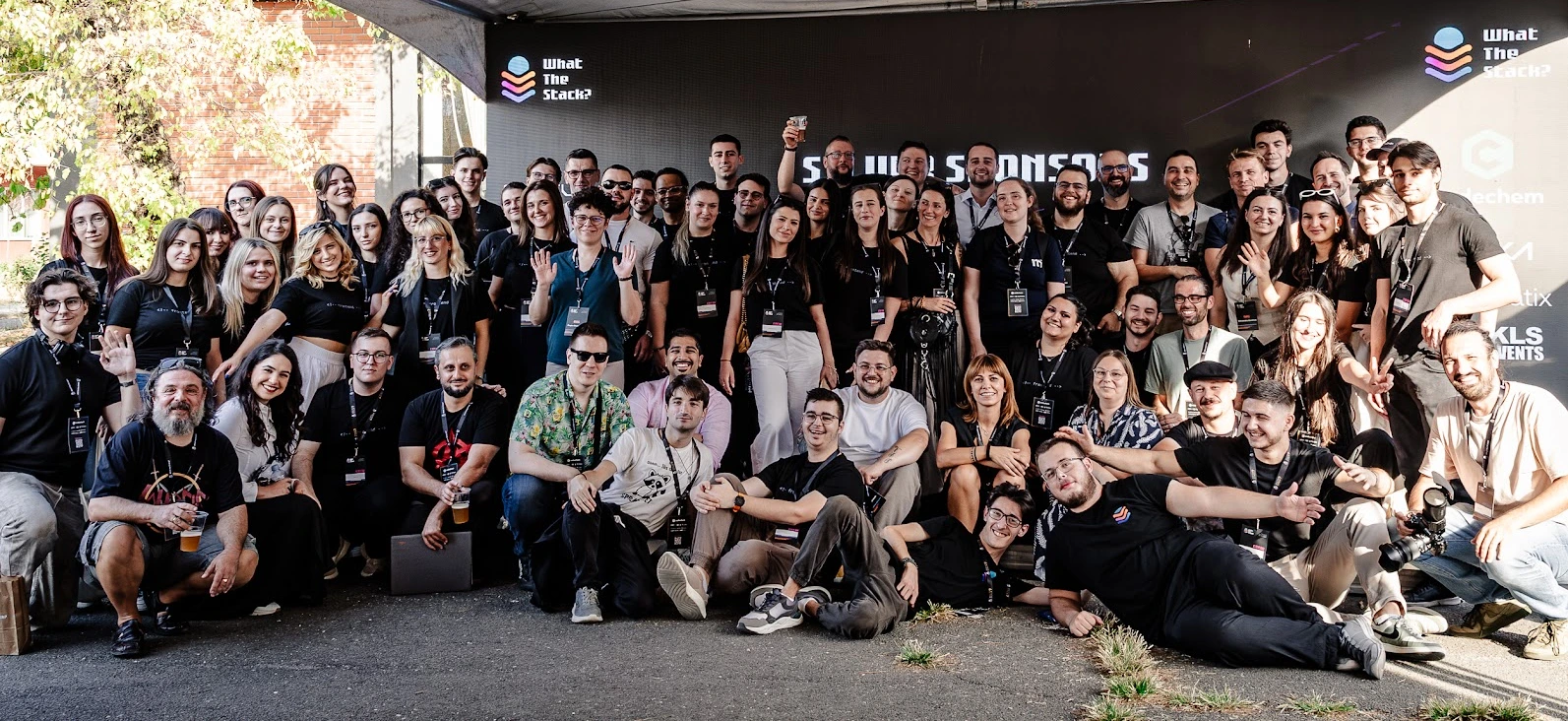
There's a curious feeling when you've finished running a conference. The weight of the world is suddenly off your shoulders. There's happiness, sadness, and, for me personally, an urgent need to find the nearest beer station. After all, it's only proper to celebrate surviving the year in which the conference you helped start began to be seen as "big". Whatever that means.
Behind the scenes
2026 , in many ways, didn't feel like as much of a struggle as 2025 did. I'm sure it's partially a result of us knowing what we're doing and having done it before. In the previous editions, we were a larger crew - we held meetings and made most decisions by committee. There are advantages to that, but things move really slowly, and often, we just can't afford "slow". For 2026, we decided to sort of split the crew - Pavlina and I would handle most of the organizing, with the rest of the crew pitching in where appropriate. Everyone got to pitch in during the week prior to the conference and on the main conference day. It worked pretty well - sometimes, having to debate things with just one person has its benefits :)
The CFP went relatively smoothly too. The committee did a stellar job (thanks, Karo, Boro, Ivan and Gjorgji!) with scoring and selection. Putting that selection into a programme is one of those things I both dread and love doing - it's a total chore (LLMs are helpful here tho!) and an absolute joy to see when you're finished and it makes narrative sense.
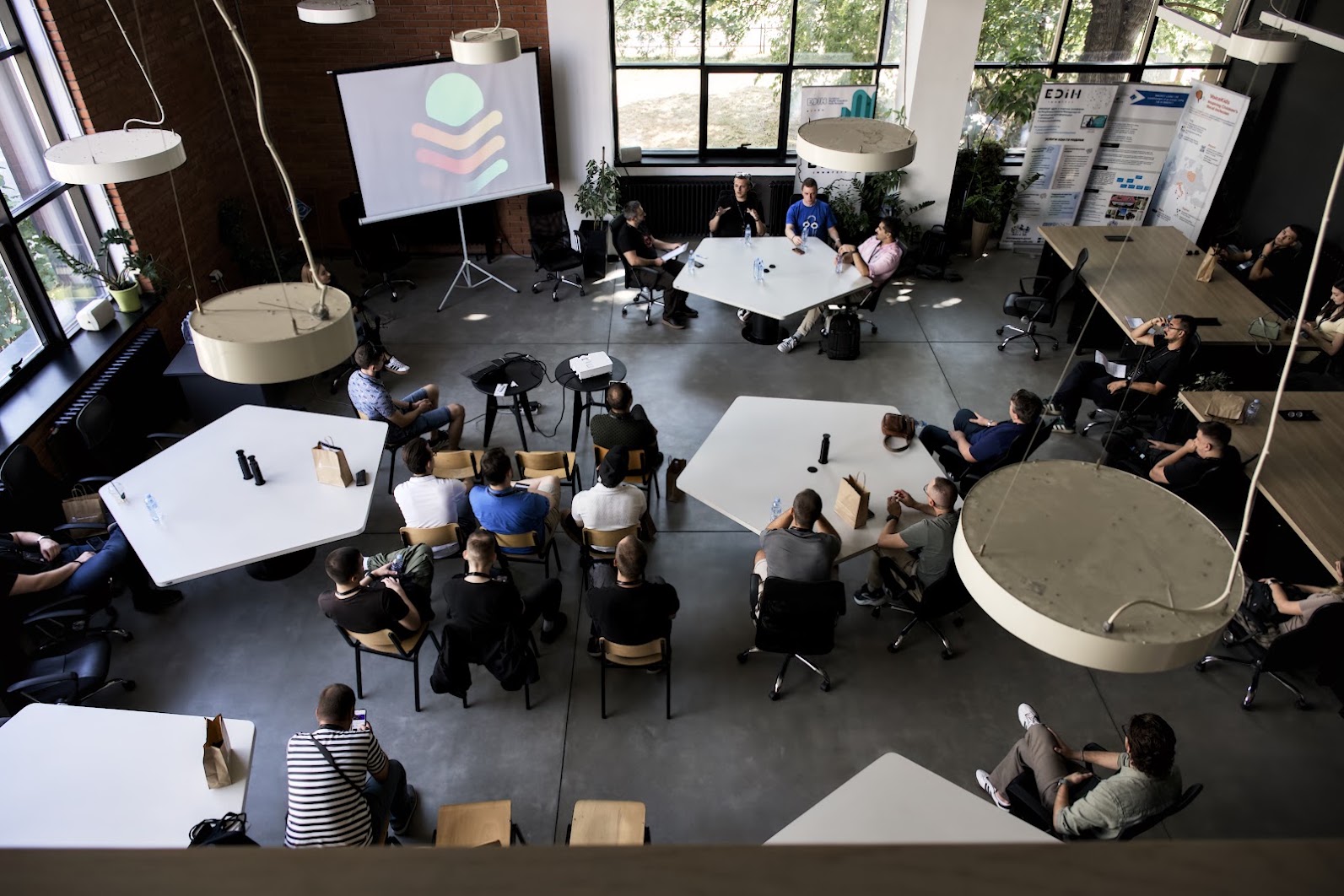
The only exception was Stage 5. We had a very different idea of what to do with it from the start - it was supposed to be an experimental, maybe lightning talk, maybe projects, maybe whatever-else-we-didn't-cover stage with no hard schedule. Turns out, that's a logistical nightmare, so we changed plans and made it a stage for themed fireside chats. We had six of those, with active audience involvement. The feedback we got for that was overwhelmingly positive, so we're keeping that format for Stage 5 in 2027 (and recording it this time around, and fixing the audio).
Sponsorships and ticket sales probably deserve a separate post - to me, it felt like they were going more easily this year. But I mostly know the nicely summarized version of events when it comes to sponsorships, since Pavlina did all the work there. I'm eternally grateful for that - sponsorships are not my forte.
We managed to get more than 1,000 people throughout the week, which to me looks like a pretty amazing number. While ticket sales are hard to predict overall, the numbers show us that people tend to get their tickets in the last two months, with a steady increase in volume as the main day gets closer. Our late publication of the full programme is probably related to that. To address that, we'll likely open the CFP earlier and finish selection sooner, so that we have the programme up as soon as possible (and hopefully make ticket sales more predictable that way).
A retelling from my perspective
The whole week was sort of a blur, to be honest: last-minute fixes to the ticketing system, gamification, wrangling thermal printers, last-minute programme changes (usually for good reasons), and meeting people. Here are the moments that stuck with me:
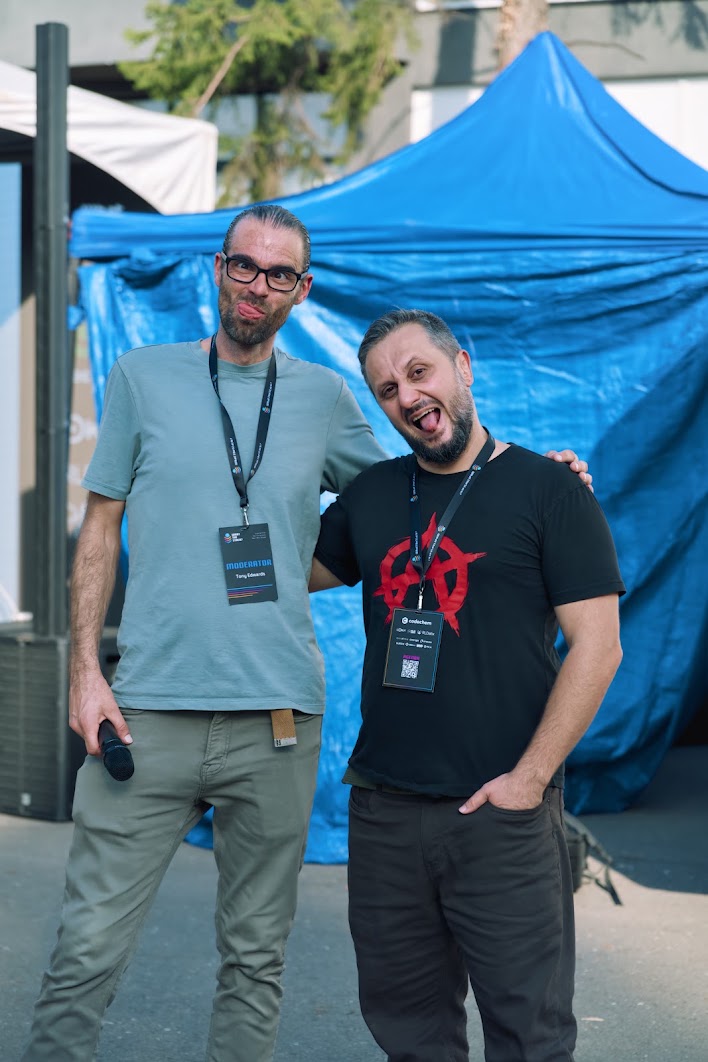
Beers with Tony
If I remember this correctly, Tony Edwards arrived first, on Tuesday. Naturally, that meant beers and catching up, which marked the start of the conference week for me.
The MAUI day speakers' dinner
Since WTS is all about empowering all of the tech communities, local or otherwise, we were more than happy to help the local MAUI folks start up their own conference - and we got invited to their speakers' dinner. I got to meet a bunch of people over there, get to know some MAUI folks, local and otherwise, and even managed to have some productive conversations, despite the REALLY loud music.
Note: Mad props to the local MAUI community. They killed it with everything, even though it was their first time doing a conference (or an event, for that matter). We'd be honored to collab again on anything.
The casual post-Thursday-workshop dinner
Alongside MAUI day, Faris Aziz ran a workshop at Base42 , while I was debugging the thermal printers for the main day, which was two days away.
All I'm gonna say on the topic is: if you ever design a system around Raspberry Pis, check device power draws if you're hooking up some USB-C devices. Or risk redesigning an entire registration system two days before a conference.
One of the best evenings for me personally followed - a bunch of folks arrived on Thursday too: Santosh Yadav , Alex Lichter , and Bogdan Ilie , to name a few. While I enjoy the scheduled stuff around conferences, like speakers' dinners and afterparties, it's these spontaneous evenings that I really love. People tend to be far more relaxed and put on less of a persona, and you get to know them better. Which is exactly how quality friendships are born.
Friday, before the speakers' dinner
Friday was a hectic blur of testing and fixing bugs in our various in-house software tools, onboarding folks on the registration system, and last-minute stage changes... Oh right, that one. Yeah, at least a part of the confusion around "where's Stage 5?" is my fault. I literally had it moved less than 24 hours before the main day, so a bunch of stuff had to be redone, reprinted, and redisplayed around the campus. My sincere apologies for that. I'll try to do better next year :)
The speakers' dinner
Speakers' dinners, to me, are a funny thing. When I attend them as a speaker, I usually wallflower the hell out of them. I'm not sure why exactly - I don't consider myself shy. But as an organizer, I take it as a responsibility to talk to everyone I can. I don't get to have many in-depth discussions (if any), but I feel like it's more important to make everyone feel welcome and part of the event than to debate the finer points of signals, datastar, how AI will replace this or that, or whatever else might be hot at the moment.
To be perfectly honest, I don't remember a ton of details from the night - a function of running on all cylinders for days, I imagine. Still, for me, it felt like a good time.
The big day
"I'll sleep when I'm dead" is something I said repeatedly over the week. But once the big day comes around, the adrenaline kicks in and everything becomes a matter of looking for what to handle next (or sometimes, which fire to put out).
After a round of hellos and finding out about some scheduling drama (not our fault, the venue did a boo-boo), I went for a round of checks and started getting ready for the opening. As is tradition, I got to go on stage and greet everyone after Tony did a stellar job of waking everyone up.
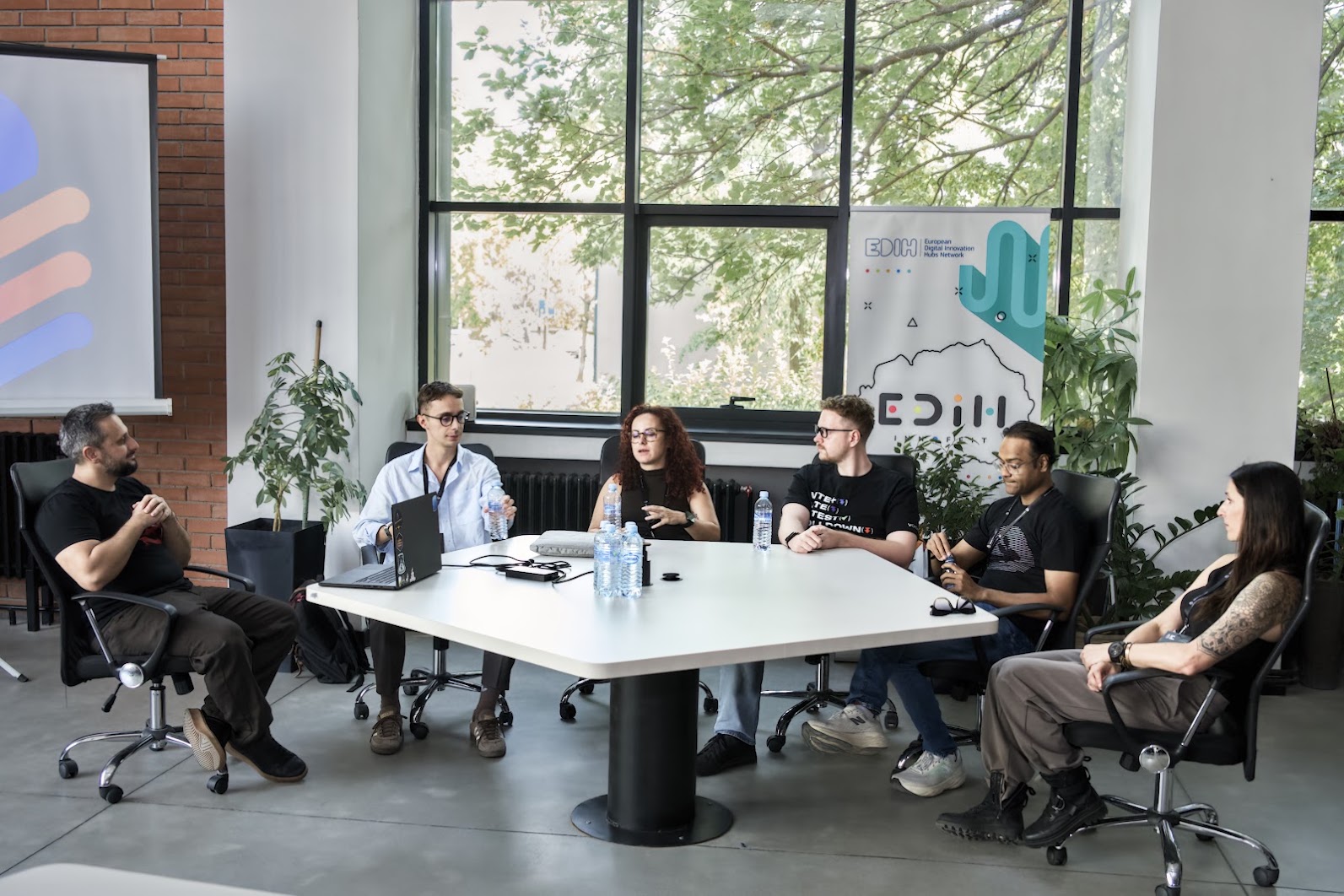
After that short opening, I spent about 60% of the day at Stage 5, running three panels with discussions I thoroughly enjoyed - the future of open source, product engineering, and getting into IT (and how it's currently broken in 50 different ways). I spoke to whoever I could on the way, helped put out an iOS-specific fire, gathered QR code data for awards... and all of a sudden, it was closing time. I got back on stage, gave away some awards, and did a round of thank-yous.
And suddenly, silence - nobody is looking for me, nothing's burning anymore, the beer station's getting ready. Ah, but wait - I still had a guitar and a guitar amp to grab for the after-after party. After all, beer-infused karaoke is a must :D
Thirty minutes later, I felt like the weight of the world was off my shoulders. Conference done, I could relax now. Sadness, happiness, all mixed into one. Dina had a DJ set ready and we were slowly warming up to continue the party at Base42. Which, of course, was amazing. Be there next year ;)
The first few days afterwards
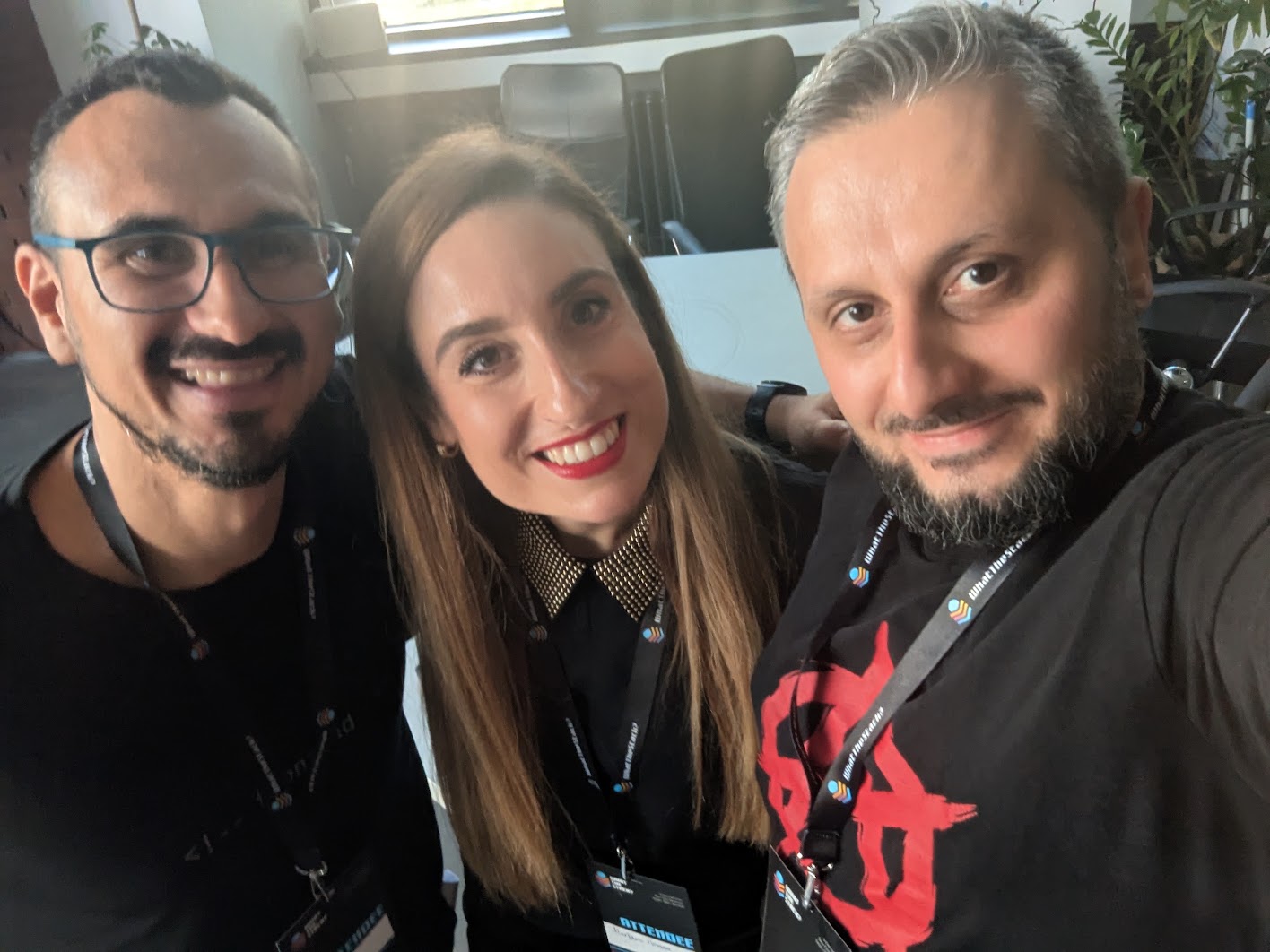
I split the first few days afterwards between getting some rest and meeting speakers who were still around. I really enjoy those moments - it's the only real chance I get to have a meaningful conversation. Without the burden of having to think about everything, you can actually be present and spend some quality time together.
I slowly started gathering my thoughts so that I could write this whole thing down. It did take me almost a month, but at least it's done now :)
The aftermath
What went right
There's plenty to be happy about:
- We had more than 1,000 people throughout the week!
- People had a mostly good experience, judging by our feedback form and conversations we had.
- We helped local communities have successful events of their own in the week prior to WTS.
- The choice of topics seemed to be well received (although, keep reading - the meta has truly changed).
What went wrong
And there's also plenty to fix:
- Long queues - whether due to technical issues at registration or having only one station each for coffee and food. The logistics of that aren't fun.
- More technical issues, luckily nothing to do with mail servers - I've learned my lesson from last year ;)
- Heavy polarization around the venue choice - people either loved it or hated it. No middle ground.
- We really need to start everything sooner - the CFP, programme selection, ticket sales, all of it. Makes it easier for everyone involved.
The meta has changed - and what that means for WTS2027
That product engineering discussion ties into something bigger I've been thinking about. AI has changed the game. Writing code still matters, but the act of writing it is becoming a smaller part of what it takes to ship something. You still have to figure out what to build, make the pieces work together, and maintain the thing once it's out in the world.
For WTS, that means putting more focus on what it takes to build and ship a product: engineering, design, delivery, and maintenance. Almost the full lifecycle. We're not moving away from the techie stuff or the community. We're broadening the conversation beyond the code itself. The topics might shift, but the people-first part stays.
We have some interesting things planned, which we'll reveal in the coming weeks, together with the feedback summary of WTS2026 and how we plan to respond to each complaint. Stay tuned!
In closing
Overall, I'm happy with WTS2026. Helping local communities run their own events, making speakers feel welcome, and giving audiences a voice all come back to the same principle: people first. We managed to keep that at the heart of the conference, and I don't think that will ever change. The message might shift, but WTS will very much remain a by-the-community, for-the-community thing.
Stay in the loop
New articles, talks, and the occasional deep cut — straight to your inbox.